
It is called Reed Flute hollow, is an enchanting natural limestone cave that takes its name from the reeds that grow around it and that can become flutes capable of spreading a harmonious sound. Included by many in the Top Ten places to visit at least once in a lifetime, the Reed Flute Cave is especially popular with photography enthusiasts, precisely because of the evocative landscape that can be admired inside.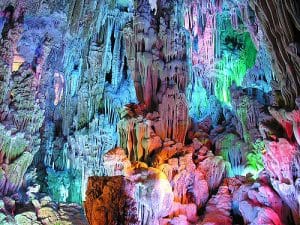
The thousand-year history of Reed Flute Cave
It is shaped like a bag and is 18 metres high at its highest point and 93 metres wide. As soon as you enter it, a breathtaking spectacle opens up before your eyes: stalactites, stalagmites and rock formations illuminated by lights of every colour, creating a decidedly unforgettable visual paradise. In addition, it is possible to recognise so many shapes in the rock formations, from animals and flowers to legendary creatures and even Father Christmas with a sack of gifts in tow.
For over 1,200 years, it has been one of the most famous attractions in Guilin, south of the China. During the Second World War, it was used as an air-raid shelter, saving the lives of many people. It was these groups of refugees who rediscovered the cave, which, thanks to the bamboo canes that covered the entrance, was able to blend in with nature.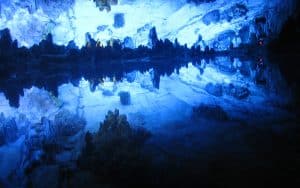
The cave was opened to the public in 1962 but the lighting system is much more recent and the effects it creates attract thousands of visitors from all over the world every year. The Reed Flute cave is located in Guilin, a city in the Guanxi, It is also known for another peculiarity: more than 70 stone inscriptions can be found on the rock walls, dating back to 792 AD. A kind of travel diaries and poems by philosophers and scholars belonging to the dynasty Tang.




 English
  Italian
  Spanish